
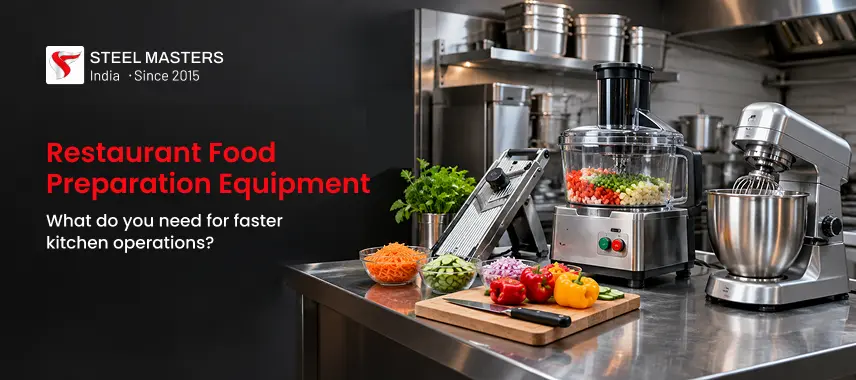
A well-organised restaurant kitchen plays an important role in delivering quality food and excellent customer service. From preparing ingredients to managing busy service hours, every kitchen activity requires proper planning, skilled employees, and reliable equipment. Choosing the right tools helps restaurant owners boost productivity, cut prep time, and maintain consistent food quality.
Restaurant Food Preparation Equipment is essential for handling daily kitchen activities such as washing, cutting, chopping, mixing, storing, and organising ingredients. The right equipment makes these tasks easier and helps kitchen staff work more efficiently.
Whether you operate a restaurant, hotel, café, cloud kitchen, or catering business, investing in suitable equipment can improve your kitchen workflow. In this guide, we will discuss the essential equipment, its benefits, and the factors to consider when planning a professional kitchen.
1. Understand Your Restaurant's Food Preparation Requirements
Before purchasing equipment, understand your restaurant's daily operations. Every food business has different preparation requirements depending on its menu, customer volume, kitchen space, and cooking methods.
For example, a restaurant serving Indian cuisine may require vegetable cutters, preparation tables, storage containers, and food processing machines. A bakery may need commercial mixers, dough preparation equipment, and specialised workstations.
Planning your requirements helps you select the right Commercial Food Preparation Equipment without spending money on unnecessary products.
Consider these important factors:
- Daily food production capacity.
- Number of kitchen employees.
- Menu variety and preparation methods.
- Available kitchen space.
- Expected customer volume.
- Equipment maintenance requirements.
A clear understanding of these requirements creates a strong foundation for an efficient commercial kitchen.
2. Essential Equipment for Faster Kitchen Operations
A professional kitchen needs different equipment for different preparation activities. Selecting suitable products helps employees complete their tasks quickly and maintain an organised workspace.
Stainless Steel Preparation Tables
Preparation tables are among the most important products in a commercial kitchen. Chefs use them for cutting vegetables, preparing ingredients, arranging utensils, and assembling dishes.
Stainless Steel Kitchen Equipment is widely preferred because stainless steel offers durability, easy cleaning, and good corrosion resistance when properly maintained.
When selecting preparation tables, consider their dimensions, construction quality, working height, and storage options. A properly designed table provides sufficient workspace and helps employees organise their preparation activities.
Commercial Vegetable Cutters
Vegetable preparation can take considerable time, especially in restaurants that prepare large quantities of food every day.
Commercial vegetable cutters, slicers, dicers, and food processors help kitchen employees complete repetitive cutting tasks more efficiently.
These machines are useful for:
- Slicing onions and tomatoes.
- Chopping different vegetables.
- Dicing potatoes.
- Preparing salad ingredients.
- Processing ingredients for sauces and gravies.
Choose machines according to your daily production requirements. Check their cutting capacity, blade quality, safety features, and cleaning requirements before purchasing.
Commercial Food Mixers
Food mixers help restaurants prepare dough, batter, sauces, and other ingredients with less manual effort.
Commercial mixers are particularly useful for bakeries, hotels, restaurants, and catering businesses that handle large preparation volumes.
Before selecting a mixer, evaluate its motor performance, bowl capacity, speed settings, attachments, and maintenance requirements.
A suitable machine helps employees complete mixing tasks consistently while improving preparation efficiency.
Commercial Washing Stations
Clean ingredients and properly washed utensils are essential for maintaining food safety.
Commercial washing stations provide dedicated areas for cleaning vegetables, utensils, and kitchen equipment. Stainless steel sinks are popular because they offer durability and are easy to maintain.
A well-planned washing station should include sufficient space, proper drainage, convenient water connections, and suitable arrangements for different washing activities.
Separating washing areas from ready-to-eat food preparation zones also helps reduce cross-contamination risks.
Food Storage Containers and Shelving
Proper storage helps restaurants protect ingredients and maintain an organised kitchen.
Commercial storage containers, racks, and shelving systems allow employees to arrange raw materials, prepared ingredients, and kitchen supplies systematically.
Choose food-grade containers and suitable storage systems that offer easy accessibility, adequate capacity, and simple cleaning.
Proper labelling and stock rotation also help restaurants reduce food wastage and maintain ingredient quality.
3. How Restaurant Kitchen Equipment Improves Productivity
The right Restaurant Kitchen Equipment helps employees manage daily responsibilities without unnecessary delays. When every workstation has suitable tools, kitchen staff can complete preparation activities more smoothly.
Here are some important productivity benefits:
Faster Food Preparation: Commercial machines reduce the time required for cutting, mixing, and processing ingredients.
Better Employee Coordination: Dedicated workstations help employees understand their responsibilities and avoid unnecessary movement.
Consistent Food Quality: Suitable preparation tools help maintain uniform ingredient sizes and portion quantities.
Reduced Manual Effort: Equipment handles repetitive activities and allows employees to focus on other important tasks.
Improved Kitchen Organisation: Proper worktables, storage racks, and containers keep ingredients and utensils organised.
These improvements help restaurants manage busy hours and maintain better service standards.
4. Why Stainless Steel Is a Practical Choice for Commercial Kitchens
Material selection directly affects equipment durability, maintenance, and hygiene. Commercial kitchens require products that can handle regular use and frequent cleaning.
Stainless steel is a popular material for professional food preparation areas because of its useful properties.
Some important advantages include:
- Good resistance to corrosion, depending on the grade.
- Durable construction for regular kitchen operations.
- Smooth surfaces that support easy cleaning.
- Professional appearance.
- Suitable applications for food preparation and storage.
Grade 304 stainless steel is commonly used for commercial kitchen equipment because of its corrosion resistance and durability.
However, proper cleaning, maintenance, and food handling practices remain essential for maintaining hygiene.
5. Plan Your Kitchen Layout for Better Workflow
Purchasing quality equipment is important, but its placement also affects kitchen performance. A poorly planned layout can increase employee movement, create congestion, and delay food preparation.
A practical kitchen layout should support a smooth movement of ingredients from washing and preparation to cooking and serving.
Follow these recommendations:
Create Separate Preparation Areas
Organise washing, cutting, mixing, and storage activities into suitable zones. This helps employees work systematically.
Keep Frequently Used Tools Nearby
Position commonly used equipment, containers, knives, and preparation tables within convenient reach.
Maintain Clear Walking Spaces
Avoid placing machines or storage units where they obstruct employee movement.
Use Vertical Storage Solutions
Install suitable racks and shelves to maximise available space without overcrowding the kitchen.
Consider Employee Safety
Provide sufficient working space around machines and ensure that equipment has appropriate safety features.
A well-designed layout improves coordination and supports faster kitchen operations.
6. Factors to Consider When Buying Commercial Kitchen Preparation Equipment
Selecting equipment requires more than comparing prices. Restaurant owners should evaluate the performance, quality, and long-term value of every product.
Capacity: Choose machines that match your daily food preparation volume.
Build Quality: Check materials, construction, finishing, and overall durability.
Cleaning Requirements: Select products with easy-to-clean surfaces and accessible components.
Energy Consumption: Compare energy requirements to manage long-term operating expenses.
Maintenance Support: Check the availability of spare parts, servicing, and technical assistance.
Budget: Consider the purchase price along with maintenance expenses and expected equipment life.
Making informed decisions helps restaurants invest in equipment that supports their operational needs.
7. Common Equipment Selection Mistakes to Avoid
Restaurant owners sometimes purchase equipment without considering their actual requirements. This can result in unnecessary expenses and inefficient kitchen operations.
Avoid these common mistakes:
- Purchasing equipment without measuring kitchen space.
- Choosing machines with insufficient capacity.
- Ignoring cleaning and maintenance requirements.
- Selecting products only because they have a lower price.
- Overlooking employee movement and workstation placement.
- Purchasing equipment that does not support the restaurant menu.
- Ignoring warranty and after-sales services.
Careful planning helps restaurant owners avoid these problems and build a more productive kitchen.
8. Choose the Right Commercial Kitchen Equipment Manufacturer
A reliable manufacturer can make a significant difference when setting up a professional kitchen. Equipment quality, material selection, manufacturing standards, and after-sales support influence long-term performance.
Before choosing a supplier, review its product range, manufacturing experience, customisation options, delivery arrangements, and customer support.
Steel Masters provides stainless steel commercial kitchen solutions designed for restaurants, hotels, cafés, cloud kitchens, and other food service businesses.
Working with an experienced manufacturer helps you select suitable equipment according to your kitchen layout, preparation requirements, and business objectives.
Final Words
A productive restaurant kitchen depends on the right equipment, organised workstations, and efficient preparation methods. From stainless steel preparation tables and vegetable cutters to commercial mixers, washing stations, and storage systems, every product contributes to smoother daily operations.
Investing in quality Restaurant Food Preparation Equipment helps reduce manual work, improve preparation speed, maintain hygiene, and support consistent food quality.
Before making a purchase, evaluate your menu, kitchen space, production capacity, and long-term requirements. Choosing suitable equipment and working with a reliable manufacturer can help create a professional kitchen that supports business growth.
Table of Contents
- 1. Understand Your Restaurant's Food Preparation Requirements
- 2. Essential Equipment for Faster Kitchen Operations
- Stainless Steel Preparation Tables
- Commercial Vegetable Cutters
- Commercial Food Mixers
- Commercial Washing Stations
- Food Storage Containers and Shelving
- 3. How Restaurant Kitchen Equipment Improves Productivity
- 4. Why Stainless Steel Is a Practical Choice for Commercial Kitchens
- 5. Plan Your Kitchen Layout for Better Workflow
- Create Separate Preparation Areas
- Keep Frequently Used Tools Nearby
- Maintain Clear Walking Spaces
- Use Vertical Storage Solutions
- Consider Employee Safety
- 6. Factors to Consider When Buying Commercial Kitchen Preparation Equipment
- 7. Common Equipment Selection Mistakes to Avoid
- 8. Choose the Right Commercial Kitchen Equipment Manufacturer
- Final Words