
Introduction
Running a large restaurant requires more than experienced chefs and quality ingredients. It also requires a properly designed kitchen with reliable equipment that can handle continuous food production. Unlike small cafés or food outlets, large restaurants often serve hundreds of customers every day. During peak hours, kitchen employees must prepare multiple dishes, manage ingredients, and maintain food quality without slowing down service.
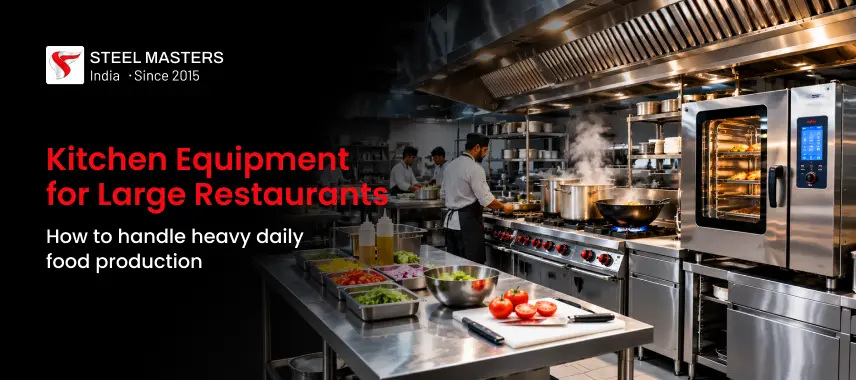
Choosing the right Kitchen Equipment for Large Restaurants plays an important role in managing these demanding operations. From commercial cooking ranges and food preparation machines to refrigeration systems and stainless steel workstations, every piece of equipment contributes to kitchen productivity.
A well-equipped kitchen helps reduce preparation time, minimize manual work, maintain hygiene, and improve staff coordination. With proper planning and suitable equipment, restaurant owners can manage heavy workloads while delivering consistent food quality.
Understand Your Restaurant's Daily Production Requirements
Before purchasing kitchen equipment, understand how much food your restaurant prepares each day. Equipment requirements depend on the restaurant's size, menu, customer capacity, and operating hours.
A restaurant serving a large number of customers needs higher production capacity than a small food outlet. Similarly, a restaurant specializing in Indian cuisine may require different cooking equipment compared to a bakery or continental restaurant.
Consider the following factors before selecting equipment:
- Average number of customers served daily.
- Number and variety of dishes on the menu.
- Food production requirements during peak hours.
- Available kitchen space.
- Number of chefs and kitchen employees.
- Storage requirements for raw ingredients.
- Expected future business expansion.
Understanding these requirements helps restaurant owners invest in suitable machines instead of purchasing equipment that may not support their actual operations.
Invest in Heavy-Duty Commercial Cooking Equipment
Cooking equipment is the foundation of every professional restaurant kitchen. Large restaurants need machines that can handle continuous operations and prepare multiple food items efficiently.
Standard domestic appliances are generally unsuitable for heavy commercial workloads. Commercial cooking machines are designed for professional food preparation and higher production requirements.
Some essential cooking equipment includes:
- Commercial Gas Ranges: Suitable for preparing multiple dishes simultaneously.
- Heavy-Duty Ovens: Useful for baking, roasting, and cooking large food portions.
- Commercial Deep Fryers: Help prepare fried food efficiently during busy service hours.
- Commercial Griddles: Suitable for burgers, sandwiches, grilled vegetables, and breakfast items.
- Steam Cooking Equipment: Helps prepare vegetables, rice, and other food items.
- Commercial Cooking Kettles: Useful for preparing soups, gravies, sauces, and bulk food preparations.
Choosing suitable Heavy Duty Cooking Equipment helps chefs maintain consistent cooking performance and manage demanding restaurant operations.
Restaurant owners should also consider equipment capacity, energy consumption, safety features, and ease of cleaning before making a purchase.
Choose Efficient Commercial Food Preparation Equipment
Food preparation is one of the most time-consuming activities in large restaurant kitchens. Tasks such as chopping vegetables, mixing ingredients, kneading dough, and processing food require considerable time and effort.
When these activities are performed manually, employees may struggle to complete preparation work before service begins.
Investing in Commercial Food Preparation Equipment helps restaurants improve productivity and reduce repetitive manual tasks.
Important preparation equipment includes:
- Commercial vegetable cutting machines.
- Food processors.
- Dough kneading machines.
- Commercial mixers.
- Potato peeling machines.
- Commercial blenders.
- Stainless steel preparation tables.
These machines help employees process ingredients efficiently and maintain consistency across different food preparations.
For example, a vegetable cutting machine can help kitchen staff prepare large quantities of vegetables in less time. Similarly, commercial mixers can handle larger batches of dough and other ingredients.
Selecting machines according to daily production requirements helps restaurants improve workflow and reduce unnecessary labour pressure.
Install High-Capacity Refrigeration and Storage Systems
Food storage is another important part of large restaurant operations. Restaurants must store vegetables, dairy products, meat, seafood, sauces, and prepared ingredients under suitable conditions.
Insufficient refrigeration can affect ingredient quality and increase food wastage. Therefore, large restaurants should invest in suitable refrigeration systems with sufficient storage capacity.
Common refrigeration equipment includes:
- Commercial refrigerators.
- Deep freezers.
- Walk-in cold rooms.
- Under-counter refrigerators.
- Refrigerated preparation counters.
- Commercial display refrigerators.
A properly organized storage system allows employees to access ingredients quickly during busy hours.
Restaurant owners should also consider the type of ingredients being stored, daily consumption, temperature requirements, and available floor space.
Regular temperature monitoring, proper labelling, and stock rotation help maintain food quality and support safe kitchen operations.
Use Stainless Steel Kitchen Equipment for Durability and Hygiene
Hygiene is essential in every commercial food business. Kitchen surfaces and equipment must withstand regular use, frequent cleaning, and demanding working conditions.
Stainless Steel Kitchen Equipment is widely preferred in professional kitchens because it offers durability, corrosion resistance, and easy maintenance when properly selected and cared for.
Some commonly used stainless steel products include:
- Stainless steel preparation tables.
- Commercial kitchen sinks.
- Storage racks and shelves.
- Stainless steel cabinets.
- Work counters.
- Wall-mounted shelves.
- Exhaust hoods.
- Utensil storage units.
Stainless steel workstations help create organized preparation areas and support regular cleaning routines.
Restaurant owners should pay attention to material grade, thickness, finishing, and fabrication quality when purchasing equipment. Food-contact surfaces should meet applicable food safety requirements.
Investing in quality stainless steel products can also reduce frequent replacement costs and support long-term kitchen performance.
Design a Kitchen Layout That Supports Heavy Food Production
Even the best equipment cannot deliver efficient results if the kitchen layout is poorly planned. In large restaurants, employees must move between different workstations without unnecessary walking or congestion.
A practical kitchen layout improves communication, reduces delays, and supports smooth food production.
Separate Food Preparation Areas
Keep cutting tables, sinks, food processors, and vegetable preparation machines together. This arrangement allows employees to complete preparation tasks without moving repeatedly across the kitchen.
Create an Organized Cooking Section
Position gas ranges, ovens, fryers, and cooking equipment in a dedicated area. Ensure employees have sufficient working space and safe access to machines.
Maintain a Separate Plating Station
Keep the plating and dispatch counter close to the cooking section. This helps chefs prepare finished dishes and send orders to serving staff quickly.
Plan a Dedicated Washing Area
Dishwashing machines, sinks, and utensil storage should be arranged separately from food preparation areas to reduce cross-contamination risks.
A properly designed layout helps employees perform their duties efficiently and keeps the kitchen organized during peak service hours.
Select Equipment That Reduces Labour and Saves Time
Large restaurants often operate with multiple chefs, helpers, and cleaning employees working simultaneously. Managing their responsibilities becomes easier when the kitchen has suitable equipment.
Modern commercial machines can reduce repetitive manual work and allow employees to focus on important activities.
For example, commercial mixers reduce the effort required for preparing large batches of dough. Vegetable cutters simplify ingredient preparation, while large-capacity cooking equipment helps chefs prepare multiple portions efficiently.
When selecting Restaurant Kitchen Equipment, restaurant owners should evaluate:
- Production capacity.
- Operating performance.
- Energy efficiency.
- Safety features.
- Ease of operation.
- Cleaning and maintenance requirements.
- Availability of spare parts.
Choosing suitable equipment improves employee productivity and helps restaurants manage higher customer volumes without creating unnecessary pressure on kitchen staff.
Install Proper Ventilation and Exhaust Systems
Large restaurant kitchens generate considerable heat, smoke, grease, and cooking odours. These conditions can make the working environment uncomfortable if the kitchen does not have an effective ventilation system.
A properly designed exhaust system helps remove unwanted heat and airborne contaminants from cooking areas.
Important ventilation components include:
- Commercial exhaust hoods.
- Heavy-duty exhaust fans.
- Grease filters.
- Ventilation ducts.
- Fresh-air circulation systems.
Exhaust hoods should be installed above suitable cooking equipment to capture smoke and grease effectively.
Regular filter cleaning and system maintenance are also important for maintaining ventilation performance. Restaurant owners should select systems according to cooking loads, kitchen dimensions, and applicable safety regulations.
Pay Attention to Dishwashing and Cleaning Equipment
Large restaurants use hundreds of plates, glasses, cooking utensils, and serving items every day. Manual washing can become difficult when the number of customers increases.
Commercial dishwashing equipment helps restaurants manage cleaning requirements more efficiently.
Useful cleaning equipment includes:
- Commercial dishwashers.
- Three-compartment sinks.
- Pre-rinse spray units.
- Stainless steel cleaning tables.
- Utensil storage racks.
- Waste collection units.
A dedicated washing area helps maintain cleanliness and prevents dirty utensils from interfering with food preparation.
Restaurant owners should also establish regular cleaning schedules for workstations, cooking machines, storage areas, and food-contact surfaces.
Focus on Equipment Maintenance and Safety
Commercial kitchen equipment operates for several hours every day. Continuous use can cause wear and tear, making regular maintenance necessary.
Unexpected machine breakdowns can interrupt food production, delay orders, and increase repair expenses.
To maintain equipment properly, restaurant owners should:
- Clean machines after daily operations.
- Inspect electrical connections regularly.
- Check gas connections and safety systems.
- Monitor refrigerator and freezer temperatures.
- Remove grease from exhaust filters.
- Follow manufacturer maintenance instructions.
- Replace damaged components promptly.
- Schedule professional equipment servicing.
Employee training is equally important. Kitchen staff should understand the correct operating procedures and safety precautions for every machine.
Regular maintenance improves equipment reliability, extends its working life, and reduces unexpected operational problems.
Choose a Reliable Commercial Kitchen Equipment Manufacturer
Selecting the right manufacturer is an important decision when setting up a large restaurant kitchen. Equipment quality directly affects productivity, maintenance requirements, and long-term operating costs.
A reliable manufacturer can recommend products according to the restaurant's menu, kitchen size, and daily food production requirements.
Before choosing a manufacturer, consider the following points:
Product Quality: Check material specifications, fabrication quality, and overall product durability.
Customization Options: Choose manufacturers that can provide equipment according to your kitchen dimensions and operational needs.
Installation Support: Proper installation helps ensure equipment performs as expected.
Warranty and Service: Understand warranty coverage, repair support, and spare-part availability.
Product Range: A manufacturer offering different types of commercial kitchen equipment can help simplify kitchen planning and purchasing.
Working with an experienced manufacturer helps restaurant owners build a practical kitchen that supports demanding daily operations.
Plan Your Kitchen for Future Business Growth
Restaurant businesses may expand over time. Customer numbers can increase, new dishes may be introduced, and additional food preparation areas may become necessary.
Therefore, kitchen planning should not focus only on current requirements.
Choose equipment with suitable production capacity and leave enough space for additional workstations. Plan electrical connections, water supply, drainage, and ventilation carefully.
A flexible kitchen layout makes future expansion easier and reduces the need for major modifications.
Restaurant owners should also consider equipment that supports changing menus and different food production requirements.
Final Words
Managing heavy daily food production requires more than purchasing additional cooking machines. Large restaurants need reliable equipment, organized workstations, sufficient refrigeration, proper ventilation, and regular maintenance.
Choosing the right Kitchen Equipment for Large Restaurants helps improve productivity, reduce preparation time, maintain hygiene, and deliver consistent food quality.
From heavy-duty cooking ranges and food preparation machines to stainless steel workstations and commercial refrigeration systems, every piece of equipment contributes to smooth kitchen operations.
By investing in quality products and planning the kitchen carefully, restaurant owners can create an efficient working environment that handles high customer volumes and supports long-term business growth.
Table of Contents
- Introduction
- Understand Your Restaurant's Daily Production Requirements
- Invest in Heavy-Duty Commercial Cooking Equipment
- Choose Efficient Commercial Food Preparation Equipment
- Install High-Capacity Refrigeration and Storage Systems
- Use Stainless Steel Kitchen Equipment for Durability and Hygiene
- Design a Kitchen Layout That Supports Heavy Food Production
- Select Equipment That Reduces Labour and Saves Time
- Install Proper Ventilation and Exhaust Systems
- Pay Attention to Dishwashing and Cleaning Equipment
- Focus on Equipment Maintenance and Safety
- Choose a Reliable Commercial Kitchen Equipment Manufacturer
- Plan Your Kitchen for Future Business Growth
- Final Words