
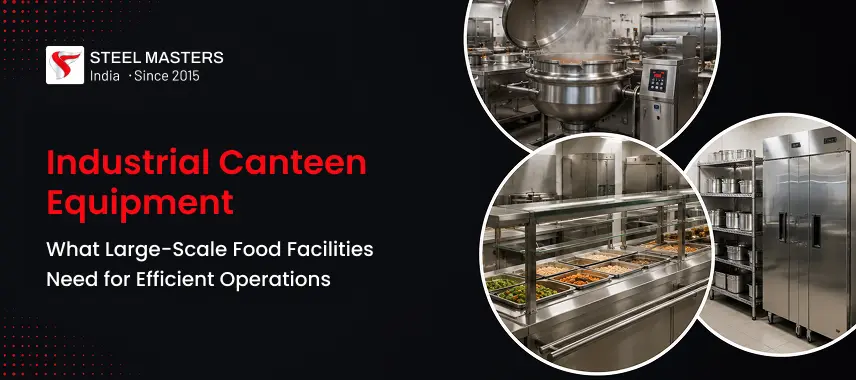
Large-scale food facilities serve hundreds or thousands of people every day. Hotels, factories, hospitals, educational campuses, corporate offices, industrial plants, hostels, and institutional kitchens need a different approach to food preparation than small restaurants. They require equipment that can handle large volumes, support kitchen hygiene, minimise unnecessary movement, and maintain an efficient food production process.
Industrial Canteen Equipment is designed for these high-volume food operations. From bulk cooking and preparation to refrigeration, washing, storage, ventilation, and food distribution, each equipment category has a specific role in a commercial kitchen.
For facility managers and kitchen planners, choosing equipment is not simply about buying larger machines. Equipment should align with the kitchen layout, daily meal volume, menu, available space, staff requirements, safety needs, and maintenance plans.
What Is Industrial Canteen Equipment?
Industrial Canteen Equipment comprises heavy-duty kitchen machines, workstations, cooking systems, storage units, washing equipment, and food-service fixtures used in large-scale food-preparation facilities.
A canteen serving 500, 1,000, or more meals per day may require large cooking vessels, bulk-preparation tables, heavy-duty burners, commercial refrigeration, dishwashing systems, food warmers, and storage units.
Common equipment includes:
- Bulk cooking equipment
- Commercial gas ranges and burners
- Steam cooking equipment
- Vegetable preparation machines
- Dough preparation equipment
- Refrigerators and freezers
- Stainless steel work tables
- Storage racks and cabinets
- Commercial sinks
- Bain-marie and food warming systems
- Food distribution counters
- Commercial kitchen hoods and exhaust systems
- Food trolleys
The exact equipment list depends on meal capacity, menu, floor space, staff strength, and the production schedule.
Why Large-Scale Food Facilities Need Purpose-Built Industrial Canteen Equipment
A large canteen cannot operate like a small kitchen. Food is prepared in bulk, ingredients move between work areas, and meals often need to be ready within a fixed time.
Purpose-built Industrial Kitchen Equipment helps create dedicated areas for preparation, cooking, washing, storage, and serving. This can reduce unnecessary movement and make daily kitchen operations easier to manage.
For example, a factory canteen preparing meals for hundreds of workers may need large-capacity cooking vessels rather than several small cooking pots. An institutional kitchen may also require vegetable cutters, grinders, and dough preparation machines when processing ingredients in large quantities.
Stainless steel surfaces are commonly used in commercial kitchens because they are easy to clean and suitable for food preparation. Proper equipment placement can also help separate raw ingredients, cooked food, utensils, and waste-handling areas.
Capacity is another important consideration. Equipment that is too small may increase preparation time, while unnecessarily large equipment can take up valuable floor space and raise costs.
Essential Industrial Canteen Equipment for High-Volume Kitchens
A large-scale kitchen requires several equipment categories to work together. Canteen Kitchen Equipment may include cooking units, preparation machines, refrigeration systems, washing stations, storage racks, serving counters, and trolleys.
1. Bulk Cooking Equipment
Large cooking vessels, stock pots, steam boilers, tilting kettles, and commercial cooking ranges are used to prepare rice, dal, vegetables, curries, soups, sauces, and other bulk meals.
Select capacity based on the number of meals prepared during each cooking cycle.
2. Food Preparation Equipment
Vegetable-cutting machines, potato peelers, mixers, grinders, dough kneaders, slicers, and food processors can support high-volume preparation.
The equipment should align with the menu. A kitchen preparing Indian meals may have different requirements from those of a bakery, hospital kitchen, or multi-cuisine facility.
3. Refrigeration and Cold Storage
Commercial refrigerators, freezers, cold rooms, and under-counter refrigeration units are used to store vegetables, dairy products, meat, frozen ingredients, sauces, and prepared food.
Storage capacity should be determined by daily consumption, delivery frequency, menu planning, and available space.
4. Stainless Steel Work Tables
Work tables provide dedicated areas for chopping, mixing, portioning, and preparation. Stainless steel tables are widely used because they offer durable, easy-to-clean surfaces.
They can include undershelves, drawers, cabinets, or dimensions tailored to the kitchen plan.
5. Washing and Cleaning Equipment
Large canteens require dedicated washing areas for utensils, cooking vessels, trays, plates, and kitchenware.
Commercial sinks, pre-rinse stations, dishwashing machines, drainage systems, and utensil storage areas can handle high daily washing volumes.
6. Kitchen Ventilation and Exhaust Systems
Industrial cooking produces heat, steam, smoke, grease, and fumes. Commercial kitchen hoods, exhaust fans, ductwork, filters, and fresh-air systems are therefore essential components of a large kitchen.
Proper ventilation can help maintain suitable working conditions and reduce the build-up of smoke and grease around cooking areas.
7. Food Distribution and Serving Equipment
Prepared food often moves from the production area to serving counters. Bain-marie units, food warmers, serving counters, tray collection areas, and food trolleys can support this stage.
The serving setup should match the number of people served during peak hours.
Key Factors to Consider When Choosing Industrial Canteen Equipment
Buying equipment based solely on price can create problems later. Consider these practical factors before making a purchase.
Kitchen Capacity
Calculate the expected number of meals per day and the number of meals that must be produced during peak periods.
Menu Requirements
Equipment should align with the actual menu. A kitchen preparing rice and curry will have different requirements from those of a bakery, hospital kitchen, or multi-cuisine hotel.
Available Space
Measure the kitchen before ordering equipment. Consider working clearance, doors, service access, drainage, gas connections, electrical points, and movement routes.
Material and Construction
Stainless steel is commonly used for commercial kitchen tables, racks, counters, and fabrication. Before purchase, check the steel grade, thickness, weld quality, finish, and construction method.
Utility Requirements
Check gas consumption, electrical load, water requirements, drainage, and ventilation for each major machine.
Cleaning and Maintenance
Equipment should have accessible surfaces and components that can be cleaned and serviced without undue difficulty. Maintenance access should also be planned before installation.
Safety
Gas lines, electrical connections, hot surfaces, exhaust systems, moving machinery, and wet areas require proper planning. Equipment should be positioned to provide sufficient working space for kitchen staff.
Installation and Support
Large kitchen projects involve more than equipment delivery. Installation, testing, utility connections, site coordination, and after-sales support should also be included.
Benefits of Investing in the Right Industrial Kitchen Equipment
The right equipment can make a clear difference in large-scale food production.
Higher production capacity: Large-capacity cooking and preparation equipment enables kitchens to process more food within planned production periods.
Better use of staff time: Suitable machinery can handle repetitive preparation tasks, freeing staff to focus on cooking, quality checks, portioning, and service.
Better kitchen workflow: Proper placement of preparation, cooking, washing, storage, and serving equipment can reduce unnecessary movement.
Better hygiene management: Dedicated workstations and easy-to-clean surfaces support regular cleaning and improve separation of food-handling activities.
Lower operational waste: Correct equipment sizing can help reduce overproduction, inefficient batch cooking, and unnecessary utility use.
Long-term value: Commercial-grade equipment selected for the appropriate workload can provide years of service when properly operated and maintained.
The goal is not to purchase the most expensive equipment. Equipment should be selected based on actual production requirements and the kitchen's physical design.
Why Choose Steel Masters India for Industrial Canteen Equipment
Steel Masters India provides commercial kitchen equipment and industrial kitchen solutions for facilities requiring large-scale food-preparation systems.
Requirements can range from individual equipment such as cooking units, work tables, racks, and counters to complete kitchen setups that include fabrication, installation, and equipment placement.
A manufacturer-led approach is useful when equipment must fit specific dimensions or work around an existing kitchen structure. Stainless-steel fabrication can be planned to suit available space, production requirements, and intended workflow.
For large canteens, the project should be assessed as a complete system rather than as a collection of unrelated machines. Cooking capacity, preparation areas, refrigeration, washing, storage, ventilation, serving counters, and staff movement all need to work together.
Steel Masters India supports commercial kitchen projects through equipment manufacturing, stainless-steel fabrication, kitchen planning, and installation across India. This makes it a suitable option for organisations planning new canteens, facility expansions, institutional kitchens, and large food-production areas.
Final Thoughts
Select industrial canteen equipment based on production volume, menu, kitchen layout, staff requirements, and daily operating conditions. From bulk cooking vessels and preparation equipment to refrigeration, ventilation, storage, washing stations, and serving counters, each category plays a role in food production.
Before purchasing Large Scale Kitchen Equipment, facility owners and project managers should calculate meal capacity, review the kitchen layout, assess utility requirements, select suitable materials, and plan for installation and maintenance access.
Industrial Catering Equipment is an important part of large food-service operations, where meals must be prepared and served in substantial quantities. Choosing suitable equipment from the planning stage can help large food facilities maintain consistent production and handle daily demand with greater control.
Table of Contents
- What Is Industrial Canteen Equipment?
- Why Large-Scale Food Facilities Need Purpose-Built Industrial Canteen Equipment
- Essential Industrial Canteen Equipment for High-Volume Kitchens
- 1. Bulk Cooking Equipment
- 2. Food Preparation Equipment
- 3. Refrigeration and Cold Storage
- 4. Stainless Steel Work Tables
- 5. Washing and Cleaning Equipment
- 6. Kitchen Ventilation and Exhaust Systems
- 7. Food Distribution and Serving Equipment
- Key Factors to Consider When Choosing Industrial Canteen Equipment
- Kitchen Capacity
- Menu Requirements
- Available Space
- Material and Construction
- Utility Requirements
- Cleaning and Maintenance
- Safety
- Installation and Support
- Benefits of Investing in the Right Industrial Kitchen Equipment
- Why Choose Steel Masters India for Industrial Canteen Equipment
- Final Thoughts