
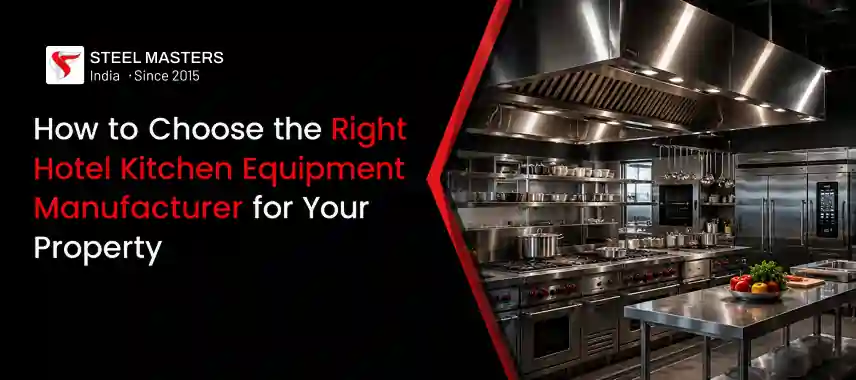
Setting up a commercial kitchen is one of the biggest investments in the hospitality industry, and choosing the right hotel kitchen equipment manufacturer can directly affect long-term performance. Whether you are opening a boutique hotel, a luxury resort, a business hotel, or a large banquet property, the kitchen plays a major role in daily operations. Guests may never see the kitchen, but the quality of food service depends heavily on how well it is built.
Many hotel owners focus primarily on menu planning, interior design, or staffing in the early stages of development. Kitchen infrastructure is often deferred to later discussions, which can lead to poor purchasing decisions. Choosing the wrong manufacturer can result in delays, maintenance issues, poor workflow, unnecessary repair costs, and equipment that fails under heavy use.
This is why selecting the right manufacturer matters far more than many property owners realise.
A manufacturer does more than supply steel counters, cooking ranges, refrigeration systems, and washing stations. They influence kitchen workflow, food safety, staff productivity, hygiene standards, and long-term operating costs. A poor layout can slow service during peak hours. Weak fabrication can cause breakdowns. Inferior materials may rust or wear out quickly.
Choosing the right partner requires careful evaluation. You need a company that understands hospitality operations, kitchen planning, material quality, installation requirements, and post-installation support.
This guide explains what to consider before selecting a manufacturer for your property.
Understand Your Property Requirements Before Choosing a hotel kitchen equipment manufacturer
Before contacting manufacturers, clearly define your own requirements.
Every hotel kitchen is different. A luxury resort serving multiple cuisines has very different needs from those of a city business hotel offering breakfast buffets and room service. Your kitchen equipment requirements depend on factors such as:
- Number of rooms
- Daily guest capacity
- Restaurant seating
- Banquet operations
- Catering volume
- Cuisine type
- Staff strength
- Service speed expectations
Ask practical questions before requesting quotations:
- Will you operate multiple restaurants?
- Do you need separate vegetarian and non-vegetarian sections?
- Is live cooking part of the guest experience?
- Will you host weddings and large events?
- Do you need bakery or pastry production?
Clear planning helps manufacturers recommend suitable layouts and the right commercial kitchen setup for your property.
Without proper requirements analysis, you may either overspend on unnecessary equipment or buy systems that are too small to meet future demand.
Why Experience Matters When Selecting a hotel kitchen equipment manufacturer
Not every stainless steel fabricator understands hotel kitchen requirements.
Some companies primarily serve restaurants, cafes, or industrial food-processing units. Hotel kitchens are more complex because they often combine multiple operations under one roof. A skilled commercial kitchen equipment manufacturer understands both fabrication and workflow planning.
An experienced hotel-focused manufacturer understands spaces such as:
- Main production kitchen
- Hot kitchen
- Cold kitchen
- Bakery section
- Pantry
- Dishwashing area
- Storage rooms
- Staff meal section
- Banquet kitchen
- Service counters
Manufacturers with hospitality experience can identify workflow challenges before installation commences.
Ask for their project portfolio.
Important questions include:
- How many hotel projects have they completed?
- Have they worked on similar property sizes?
- Which brands or hotel groups have they served?
- Can they show case studies or completed installations?
Past work gives confidence about capability.
If a manufacturer has handled projects for premium hotels, it often indicates stronger planning and execution standards.
Check Material Quality from Your Hotel Kitchen Equipment Manufacturer
Material quality directly affects equipment life.
Commercial kitchens face constant exposure to:
- Heat
- Steam
- Water
- Oil
- Chemicals
- Heavy cleaning cycles
Low-grade materials deteriorate quickly in such conditions.
For hotel kitchen fabrication, stainless steel kitchen equipment is widely preferred, especially 304-grade stainless steel, because it offers strong corrosion resistance and durability.
When reviewing manufacturers, ask about:
Steel Grade
Confirm whether they use 304 stainless steel or lower grades, such as 202. Lower grades cost less but may rust more quickly.
Steel Thickness
Thickness affects strength and durability. Thin sheets may bend under heavy load.
Welding Quality
Poor welding creates weak joints and hygiene risks.
Finish
Smooth finishes make cleaning easier and reduce dirt accumulation.
Never compare manufacturers only on price.
Two quotations may appear similar, but material quality can vary significantly.
Cheaper fabrication often leads to higher maintenance later.
Evaluate Kitchen Design and Space Planning Capability
A good manufacturer should help design a functional kitchen, not merely fabricate equipment.
Kitchen planning affects:
- Movement of chefs
- Preparation speed
- Food safety
- Service efficiency
- Cleaning operations
Poor planning causes congestion, wasted movement, and service delays.
An experienced manufacturer studies the workflow from receiving raw materials to final food dispatch.
A well-planned kitchen usually separates zones for:
- Receiving
- Storage
- Preparation
- Cooking
- Plating
- Washing
- Waste handling
This reduces cross-contamination and improves hygiene.
Ask whether the manufacturer provides:
- Site visits
- Layout planning
- 2D drawings
- 3D concepts
- Utility planning
Manufacturers who participate early in project planning often achieve better results.
A well-designed commercial kitchen setup also supports future expansion if your property grows.
Review Product Range in Commercial Kitchen Equipment
Hotels usually require multiple equipment categories.
Working with a manufacturer that offers broad product coverage for commercial kitchen equipment can simplify procurement and coordination.
Common hotel kitchen equipment includes:
Cooking Equipment
- Gas ranges
- Griddles
- Fryers
- Ovens
- Boilers
- Steamers
Preparation Equipment
- Work tables
- Cutting stations
- Sinks
- Storage racks
Refrigeration
- Cold rooms
- Freezers
- Refrigerators
Washing Equipment
- Dishwashing stations
- Sink units
- Drain tables
Exhaust Systems
- Hoods
- Ducting
- Ventilation systems
Manufacturers with broader capabilities reduce reliance on multiple vendors.
That often improves installation coordination and project timelines.
Compare Custom Manufacturing Capability
Hotels often require non-standard equipment dimensions.
Off-the-shelf products may not suit every kitchen layout.
Custom fabrication becomes important when dealing with:
- Space limitations
- Unique architectural layouts
- Luxury properties
- Specialty cuisine requirements
- Multi-floor kitchen operations
A manufacturer with strong custom fabrication capabilities can build equipment to exact dimensions and workflow requirements. This is especially important when working with an industrial kitchen equipment manufacturer handling large-volume hospitality projects.
Ask whether they manufacture in-house or outsource production.
In-house manufacturing offers better control over:
- Quality
- Timelines
- Modifications
- Design accuracy
Manufacturers who resell only third-party products may have less flexibility.
This matters greatly to premium hotel projects.
Assess Installation Expertise
Manufacturing is only one part of the project.
Installation quality is equally important.
Even high-quality equipment can perform poorly if installed incorrectly.
Improper installation may cause:
- Gas leakage risks
- Drainage issues
- Ventilation problems
- Electrical hazards
- Workflow disruptions
Ask the manufacturer about their installation team.
Important questions include:
- Do they install using in-house staff?
- Do they coordinate with architects and contractors?
- How do they manage utility connections?
- How long does installation take?
An experienced hotel kitchen equipment supplier should also provide installation guidance to minimise operational problems after handover.
This stage deserves serious attention.
Ask About Service and Maintenance Support
Kitchen equipment is designed for heavy daily use.
Breakdowns can affect guest satisfaction and hotel revenue.
After-sales support should be part of your decision-making.
Before finalising a manufacturer, understand their service structure.
Check:
- Service response time
- Warranty terms
- Spare parts availability
- Repair support
- Annual maintenance options
If a major appliance fails during peak season, delayed support can create significant operational pressure.
Manufacturers with robust service systems deliver better long-term value.
This is particularly important for large hotels with round-the-clock kitchen operations.
Study Delivery Timelines
Hotel projects usually operate to strict opening schedules.
Construction delays already create enough pressure. Equipment delays can affect final launch timelines.
Ask manufacturers for realistic production schedules.
Discuss timelines for:
- Design approval
- Fabrication
- Dispatch
- Installation
- Final testing
Be cautious of unrealistic promises.
Rapid commitments may sound attractive during sales discussions but can lead to delays later.
Choose manufacturers known for disciplined project execution.
Consistent delivery history matters.
Compare Cost Beyond Initial Price
Price matters, but the cheapest option rarely means the best.
A better approach is to compare total ownership costs.
This includes:
- Purchase cost
- Installation cost
- Maintenance cost
- Energy usage
- Repair frequency
- Equipment lifespan
Low-cost equipment may require frequent repairs or replacement.
That increases long-term expense.
Pay attention to value rather than only quotation numbers.
A slightly higher initial investment in stainless-steel kitchen equipment can reduce operational costs for years.
Think long term.
Check Client Reviews and Reputation
Reputation sends strong buying signals.
Search for reviews, testimonials, and industry references.
When possible, speak directly with previous clients.
Ask them about:
- Product quality
- Installation experience
- Delivery commitment
- Service response
- Overall satisfaction
Honest feedback from past buyers often reveals what sales presentations do not mention.
A strong market reputation generally reflects consistent quality and service.
Choose a Manufacturer with Local Market Understanding
Local market knowledge matters more than many buyers expect.
Manufacturers familiar with regional regulations, labour conditions, utility availability, and supply chains can plan more effectively.
For example, hotels in coastal areas may need greater corrosion resistance. Large metropolitan hotels may prioritise space optimisation. Banquet-focused properties may require heavy-duty cooking systems.
A trusted hotel kitchen equipment supplier with local expertise recognises these differences.
This helps prevent planning mistakes.
Final Thoughts
Choosing the right hotel kitchen equipment manufacturer is not merely a procurement decision—it is a long-term business decision that affects operations, maintenance costs, staff productivity, and the guest experience.
The right manufacturer offers more than equipment. They bring planning expertise, quality fabrication, installation capability, and service support. Whether you work with a commercial or an industrial kitchen equipment manufacturer, careful evaluation matters.
Take time to evaluate experience, materials, design strength, manufacturing capability, service support, and reputation before making a final decision.
A carefully chosen hotel kitchen equipment manufacturer helps build a kitchen that supports your property for many years while maintaining hygiene, efficiency, and operational consistency.
Table of Contents
- Understand Your Property Requirements Before Choosing a hotel kitchen equipment manufacturer
- Why Experience Matters When Selecting a hotel kitchen equipment manufacturer
- Check Material Quality from Your Hotel Kitchen Equipment Manufacturer
- Steel Grade
- Steel Thickness
- Welding Quality
- Finish
- Evaluate Kitchen Design and Space Planning Capability
- Review Product Range in Commercial Kitchen Equipment
- Cooking Equipment
- Preparation Equipment
- Refrigeration
- Washing Equipment
- Exhaust Systems
- Compare Custom Manufacturing Capability
- Assess Installation Expertise
- Ask About Service and Maintenance Support
- Study Delivery Timelines
- Compare Cost Beyond Initial Price
- Check Client Reviews and Reputation
- Choose a Manufacturer with Local Market Understanding
- Final Thoughts