
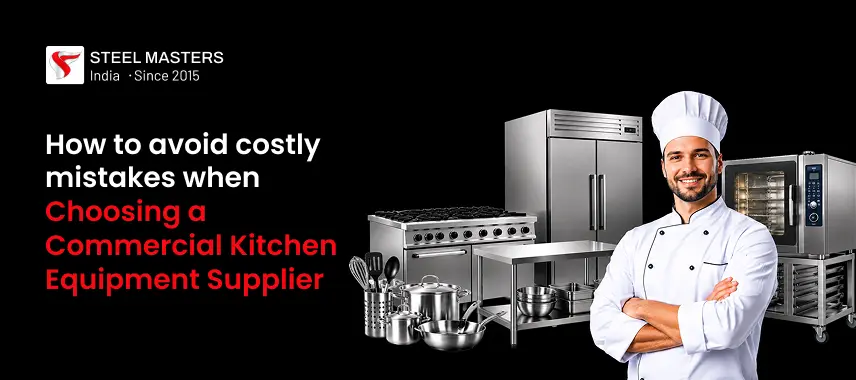
Setting up a commercial kitchen is a major investment for restaurants, hotels, cafés, cloud kitchens, and catering businesses. The equipment you choose can influence food preparation speed, hygiene, employee productivity, and long-term operating costs. A wrong purchase decision can lead to frequent repairs, unexpected expenses, and delays in opening your business.
Choosing a reliable Commercial Kitchen Equipment Supplier is therefore essential for building a kitchen that performs efficiently. The right supplier can help you select suitable equipment, understand technical specifications, plan your budget, and arrange installation support.
However, many business owners make avoidable mistakes when comparing suppliers. Some focus only on price, while others overlook product quality, warranty coverage, or delivery schedules. Understanding these issues before purchasing can help you make better decisions and protect your investment.
1. Evaluate the Supplier’s Product Range and Quality
Choosing the right commercial kitchen equipment requires more than checking prices. The quality, durability, and suitability of the products are equally important for ensuring smooth kitchen operations. Equipment that does not meet your business requirements may lead to frequent repairs, poor performance, and additional expenses.
Before selecting a supplier, review their product range and check whether they offer equipment suitable for your kitchen size, menu, and daily workload. Look for clear product specifications, durable materials, reliable construction, and easy-to-maintain designs.
Ask the supplier about the equipment's expected performance, warranty coverage, and availability of replacement parts. If possible, inspect the products before making a purchase to assess their finishing and build quality.
A supplier offering reliable products and transparent information can help you make an informed decision. By prioritising quality and suitability, you can invest in equipment that supports efficient kitchen operations and long-term business growth.
2. Check the Supplier's Experience and Reputation
Experience matters when purchasing equipment for a professional kitchen. A supplier familiar with restaurant and hotel requirements is more likely to understand the importance of equipment capacity, durability, hygiene, and workflow.
Before finalising an order, research the supplier's business background and review available customer feedback. Ask whether they have supplied equipment to businesses similar to yours.
You can also request product catalogues, technical documentation, and examples of previous installations. These details may help you evaluate the supplier's capabilities.
A trustworthy supplier should explain product differences clearly and answer technical questions. Be cautious if a supplier avoids providing specifications, offers unrealistic guarantees, or pressures you into purchasing equipment you do not need.
3. Check Product Quality Before Purchasing
Commercial kitchens operate under demanding conditions. Equipment is exposed to frequent use, heat, moisture, grease, and regular cleaning. Products with poor construction may deteriorate quickly and create additional maintenance expenses.
When purchasing stainless steel kitchen equipment, examine the material grade, thickness, surface finish, fabrication quality, and suitability for the intended application. Stainless steel is commonly used for preparation tables, sinks, counters, and storage racks because it is durable and relatively easy to clean.
However, not all stainless steel products provide the same performance. The material grade, operating environment, and maintenance practices can influence corrosion resistance and service life.
Where possible, inspect the equipment before purchasing. Look for smooth surfaces, stable construction, properly finished joints, and designs that allow easy cleaning.
Request clear product specifications and ask the supplier to explain the materials used. Selecting equipment based on verified quality rather than appearance alone can help reduce future repair and replacement costs.
4. Understand Your Kitchen's Actual Requirements
One common mistake is purchasing equipment without understanding the daily requirements of the business. A large hotel kitchen may need high-capacity cooking appliances and several refrigeration units, while a small café may require a more compact arrangement.
Start by reviewing your menu, expected customer volume, staffing levels, and peak-hour workload. These factors will help determine the type and capacity of equipment you need.
Create an equipment checklist that separates essential purchases from items that can be added later. Depending on your business, the list may include cooking ranges, ovens, fryers, refrigerators, freezers, preparation tables, sinks, storage racks, and dishwashing equipment.
Avoid purchasing oversized appliances that consume unnecessary space. Similarly, do not choose equipment with insufficient capacity simply to reduce the initial cost.
Discuss your requirements with potential suppliers and compare their recommendations. The right equipment should support your current operations while allowing reasonable room for future growth.
5. Plan Your Kitchen Layout Before Ordering Equipment
Equipment selection and kitchen planning should go hand in hand. Purchasing appliances before measuring the available space can lead to overcrowded work areas, difficult installations, and expensive modifications.
A practical commercial kitchen layout should organise receiving, storage, food preparation, cooking, plating, washing, and waste handling into a logical workflow.
Measure the kitchen carefully and confirm the dimensions of every major appliance. Check doorways, access routes, equipment clearances, and the space required to open refrigerator doors and storage cabinets.
You should also plan the locations of electrical connections, gas lines, water supplies, drainage, and exhaust systems before installation begins. Qualified professionals should assess the relevant utility and safety requirements.
An effective layout reduces unnecessary movement, helps prevent congestion, and allows staff to work more comfortably during busy service periods. Proper planning also reduces the risk of relocating equipment after installation.
6. Compare Equipment Specifications Carefully
Products that look similar may have different capacities, power requirements, materials, and operating features. Comparing equipment based only on photographs or product names can result in an unsuitable purchase.
Request detailed specifications for every item you intend to buy. Depending on the product, check dimensions, capacity, power consumption, temperature range, construction materials, safety features, and maintenance requirements.
For example, refrigeration equipment should match your storage needs and maintain appropriate temperatures under expected operating conditions. Cooking appliances should be capable of handling your menu and anticipated production volume.
Ask each supplier to provide a written quotation that identifies the exact models, quantities, accessories, and services included.
Compare the information side by side rather than focusing only on the final price. This approach helps you identify differences between offers and understand whether a lower quotation represents genuine savings.
7. Check Warranty and After-Sales Support
Commercial kitchen equipment needs regular maintenance to remain reliable. If a refrigerator, oven, or dishwasher stops working during service, it can disrupt operations and increase business expenses.
Before purchasing, understand the warranty period and the conditions that apply. Ask whether the warranty covers replacement parts, labour, transportation, and service visits.
Check whether spare parts are readily available and how to request technical assistance. If your business is located far from the supplier, confirm whether service is available in your area.
A reliable supplier should explain the recommended maintenance schedule and provide operating instructions where applicable.
Do not assume that every product includes the same warranty or service benefits. Obtain the relevant terms in writing and keep the documents accessible after installation.
Good after-sales support can help reduce downtime and make equipment ownership more manageable over the long term.
8. Confirm Delivery, Installation, and Hidden Charges
Delivery delays can affect kitchen construction, employee training, and the planned opening date of your business. Custom-made equipment may also require additional time for fabrication and finishing. Choosing a reliable Commercial Kitchen Equipment Supplier can help you coordinate deliveries and understand installation requirements before placing an order.
Before confirming your purchase, ask the supplier to verify stock availability, estimated delivery dates, transportation arrangements, and installation responsibilities.
Clarify whether the quotation includes positioning, assembly, utility connections, testing, and commissioning. Some services may require separate contractors or additional charges.
Request a written breakdown of the total project cost, including applicable taxes, delivery, installation, accessories, and customisation fees.
If your opening date is fixed, allow extra time for unexpected delays and final equipment testing. Coordinate deliveries with construction work to prevent equipment from being damaged or obstructing the installation process.
Clear agreements about costs and timelines can help prevent misunderstandings and reduce the risk of expensive last-minute changes.
9. Never Ignore Hygiene and Safety Requirements
Commercial kitchen equipment must support safe food preparation and a suitable working environment. Poorly designed equipment can make cleaning difficult, while incorrect utility connections may create serious safety risks.
Look for surfaces that are easy to clean, stable construction, accessible maintenance points, and designs suitable for the intended food service application.
Cooking appliances should be compatible with the planned ventilation and exhaust systems. Electrical and gas installations should be completed by qualified professionals in accordance with applicable requirements.
Depending on the location and type of business, you may also need to consider fire protection, drainage, handwashing facilities, and relevant food business regulations.
Ask the supplier for product documentation and installation guidance, but remember that purchasing suitable equipment does not automatically make the entire kitchen compliant.
Plan hygiene and safety requirements from the beginning instead of waiting until the kitchen is ready to open.
10. Review Payment Terms and Written Agreements
Unclear payment conditions can cause problems during commercial kitchen projects. Disagreements may arise over advance payments, delivery dates, product specifications, installation charges, or damaged goods.
Before paying, review the quotation and purchase agreement carefully. Ensure that the documents specify product models, quantities, prices, taxes, payment milestones, and delivery schedules.
For customised equipment, approve the dimensions, drawings, materials, and finishing requirements before production starts.
Check the supplier's policies for cancellations, replacements, returns, and warranty claims. Clarify what happens if delivered products differ from the agreed specifications.
Keep copies of invoices, receipts, approvals, and important communications. Written records make it easier to resolve disputes and confirm the responsibilities of both parties.
Taking time to review the agreement can prevent misunderstandings and protect your business investment.
11. Consider Long-Term Business Growth
Your kitchen requirements may change as your business expands. You might introduce new menu items, increase production, open additional locations, or begin catering for larger events.
When choosing a supplier, consider whether they can support future purchases, provide spare parts, and offer equipment suited to increased demand.
This does not mean buying every appliance immediately. Instead, plan your kitchen so that future improvements can be made without unnecessarily disrupting existing operations.
Ask suppliers about equipment upgrades, replacement options, maintenance services, and product availability. Consistent specifications across equipment can also simplify staff training and maintenance.
A supplier who understands your long-term requirements can help you make practical decisions today while preparing for future growth.
Final Words
Choosing the right Commercial Kitchen Equipment Supplier requires more than comparing prices. Product quality, technical specifications, installation planning, warranty coverage, delivery schedules, and after-sales support all influence the value of your investment.
Start by understanding your kitchen's needs, preparing a realistic budget, and comparing detailed quotations. Check material quality, confirm installation requirements, and ensure that hygiene and safety considerations are addressed before making a final decision.
A reliable supplier should offer suitable equipment, transparent communication, and dependable support throughout the purchasing process.
By avoiding common purchasing mistakes and planning carefully, you can build a kitchen that operates efficiently, reduces avoidable expenses, and supports the long-term success of your food service business.
Table of Contents
- 1. Evaluate the Supplier’s Product Range and Quality
- 2. Check the Supplier's Experience and Reputation
- 3. Check Product Quality Before Purchasing
- 4. Understand Your Kitchen's Actual Requirements
- 5. Plan Your Kitchen Layout Before Ordering Equipment
- 6. Compare Equipment Specifications Carefully
- 7. Check Warranty and After-Sales Support
- 8. Confirm Delivery, Installation, and Hidden Charges
- 9. Never Ignore Hygiene and Safety Requirements
- 10. Review Payment Terms and Written Agreements
- 11. Consider Long-Term Business Growth
- Final Words