
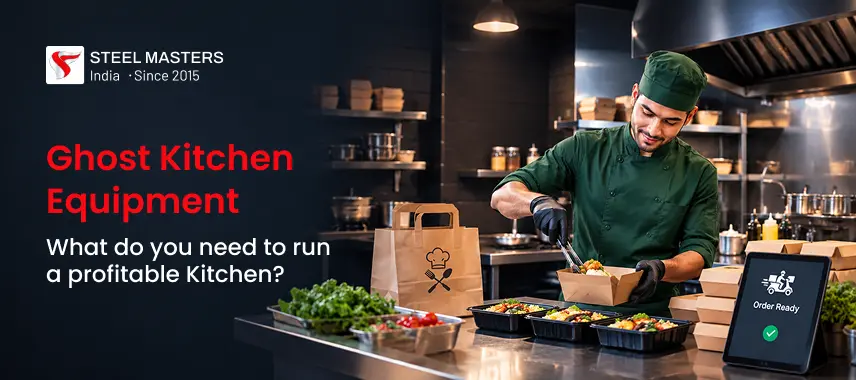
The food delivery industry has changed the way many entrepreneurs start and operate food businesses. Instead of investing in a traditional restaurant with a dining area, furniture, front-of-house staff, and customer seating, many businesses are choosing ghost kitchens. These delivery-focused kitchens allow food brands to concentrate on preparation, cooking, packaging, and delivery.
However, a successful ghost kitchen needs more than a good menu and an online ordering platform. The right Ghost Kitchen Equipment plays an important role in creating an efficient kitchen where employees can prepare food quickly, maintain consistency, and handle busy order periods.
Because ghost kitchens often operate in smaller spaces, every piece of equipment needs to be selected carefully. Cooking appliances, preparation tables, refrigerators, storage systems, ventilation, washing stations, and packaging counters should all work together as part of a practical workflow.
What Is a Ghost Kitchen?
A ghost kitchen is a professional food preparation facility that does not have a traditional dine-in area. Customers place orders through food delivery applications, websites, social media, or other online platforms. The kitchen prepares the food and sends it to the customer through a delivery network.
The business model focuses on production efficiency rather than customer seating. This allows entrepreneurs to use more of their available space for kitchen operations.
A successful ghost kitchen should have a clear workflow:
Receiving → Storage → Preparation → Cooking → Assembly → Packaging → Dispatch
When equipment is positioned according to this sequence, staff can move efficiently between stations and reduce unnecessary walking.
Why Ghost Kitchen Equipment Is Important
Choosing the right Ghost Kitchen Equipment is one of the most important decisions when establishing a delivery kitchen.
A well-planned equipment setup can help businesses improve:
- Food preparation speed
- Staff productivity
- Kitchen organization
- Order accuracy
- Food consistency
- Space utilization
- Cleaning efficiency
- Production capacity
Poor equipment planning can have the opposite effect. Oversized appliances may consume valuable floor space, while equipment with insufficient capacity can create delays during peak periods.
The best approach is to select equipment according to your menu, expected order volume, available space, staff requirements, and future expansion plans.
Start With Your Menu
Before purchasing Cloud Kitchen Equipment, first understand your menu.
Every food business has different preparation and cooking requirements. A pizza kitchen will need different appliances from a burger kitchen, bakery, Indian food business, or dessert brand.
For example, a burger operation may require griddles, fryers, refrigerators, preparation counters, and food holding equipment. A bakery may require commercial ovens, mixers, proofing equipment, work tables, and ingredient storage. An Indian food kitchen may need cooking ranges, tandoors, steamers, preparation counters, and bulk cooking equipment.
Your menu should determine your production process, and your production process should determine your equipment.
This approach helps prevent unnecessary purchases and ensures that your kitchen investment supports actual business requirements.
Commercial Cooking Equipment
Cooking equipment forms the center of most ghost kitchens. The right equipment can help employees prepare multiple orders efficiently, especially during peak demand.
Common cooking equipment includes:
- Commercial gas ranges
- Induction cooktops
- Commercial ovens
- Fryers
- Griddles
- Grills
- Tandoors
- Steam cooking units
- Food warmers
- Holding equipment
When selecting Commercial Kitchen Equipment, consider more than the purchase price. Equipment capacity, dimensions, construction quality, cleaning requirements, energy consumption, maintenance, and utility connections should also be considered.
For a high-volume kitchen, several cooking stations may be necessary to avoid production bottlenecks. For a compact operation, multifunctional appliances can help reduce the number of separate units required.
The objective is to create a balanced cooking area where each appliance supports the overall workflow.
Food Preparation Equipment
Food preparation is an essential part of daily kitchen operations. Ingredients may need to be washed, peeled, chopped, sliced, mixed, marinated, portioned, or assembled before cooking.
Useful preparation equipment includes:
- Stainless steel work tables
- Preparation counters
- Vegetable preparation tables
- Cutting stations
- Food processors
- Commercial mixers
- Ingredient containers
- Preparation sinks
Stainless Steel Kitchen Equipment is commonly used for professional preparation areas because it provides durable work surfaces and is practical for regular cleaning.
Preparation stations should be located close to the ingredients, tools, and appliances required for each task. Reducing unnecessary movement can make food production more efficient, particularly during busy periods.
Refrigeration and Cold Storage
Refrigeration is another essential part of a ghost kitchen. Ingredients such as vegetables, dairy products, meat, sauces, beverages, and prepared foods require appropriate storage.
Depending on the scale and menu, a kitchen may need:
- Reach-in refrigerators
- Upright freezers
- Under-counter refrigerators
- Refrigerated preparation counters
- Freezer units
- Cold storage rooms
The right refrigeration capacity should be based on ingredient volume and expected production.
Overcrowded refrigerators can make it difficult to organize stock, while excessive refrigeration capacity may waste space and energy. A properly planned system should provide enough storage without creating unnecessary congestion.
Frequently used ingredients should be easy to access, while backup supplies can be stored in separate areas.
Smart Storage Solutions
Storage is especially important in a ghost kitchen because available floor space is often limited.
Ingredients, packaging materials, utensils, cookware, cleaning supplies, and other items need designated storage areas. Without proper planning, work surfaces can quickly become crowded.
Useful storage options include:
- Heavy-duty storage racks
- Wall-mounted shelves
- Stainless steel cabinets
- Mobile racks
- Ingredient containers
- Dry storage shelves
- Utensil organizers
Vertical storage can increase capacity without using additional floor space. However, shelves should not block walkways, equipment doors, ventilation systems, or cleaning areas.
Items used frequently should be positioned near the stations where they are needed.
Packaging and Dispatch Area
Unlike dine-in restaurants, ghost kitchens rely heavily on packaging and delivery. This makes the dispatch area a key part of the kitchen.
After cooking, employees need to check orders, portion food, add sauces or accessories, select packaging, label the order, and prepare it for delivery.
A packaging station may include:
- Packing tables
- Packaging storage
- Food containers
- Labeling supplies
- Bag storage
- Order holding shelves
- Food warming equipment
The packaging area should be positioned close to the final assembly station. A practical layout can reduce movement and help employees process orders more efficiently.
A separate dispatch point can also help prevent delivery personnel from interfering with active preparation and cooking activities.
Ventilation and Exhaust Systems
Commercial cooking creates heat, steam, grease, smoke, and odors. Proper ventilation is therefore an important part of kitchen planning.
Depending on the equipment and cooking methods, the kitchen may require:
- Exhaust hoods
- Exhaust fans
- Ducting
- Grease filters
- Fresh-air systems
Ventilation should be planned before equipment installation. The position and type of cooking appliances can influence the ventilation requirements.
Planning these systems together can reduce installation problems and unnecessary modifications later.
Washing and Cleaning Equipment
Cleaning facilities should be included in the kitchen design from the beginning.
A professional ghost kitchen may require commercial sinks, hand-washing stations, dishwashing equipment, pre-rinse units, drainage systems, and waste bins.
The washing area should be organized so that dirty cookware and utensils can be moved efficiently without interfering with food preparation.
Cleaning chemicals and maintenance supplies should be stored separately from ingredients and food-contact equipment.
A dedicated cleaning area can help make daily kitchen maintenance more organized and efficient.
Planning an Efficient Kitchen Layout
Kitchen layout has a direct impact on how employees move and work.
A good layout should connect storage, preparation, cooking, assembly, packaging, and dispatch in a logical sequence. Employees should not need to repeatedly cross the kitchen to collect ingredients or deliver completed orders.
A useful workflow is:
Storage → Preparation → Cooking → Assembly → Packaging → Dispatch
The layout should also leave sufficient room for staff movement, equipment doors, cleaning, and maintenance.
For smaller kitchens, under-counter equipment, wall-mounted shelves, mobile storage racks, and compact appliances can improve space utilization.
However, the goal should not be to fit the maximum amount of equipment into the smallest possible area. Staff need enough room to work safely and comfortably.
Choosing Restaurant Kitchen Equipment
When purchasing Restaurant Kitchen Equipment for a ghost kitchen, expected production volume should be carefully considered.
Estimate the number of normal daily orders and your expected peak-hour demand. Equipment that performs well during low-volume periods may become a bottleneck when order numbers rise.
Consider cooking capacity, refrigeration, preparation space, storage, packaging speed, and staff workload together.
A balanced kitchen is generally more effective than one where one area has excess capacity while another struggles to keep up.
Space-Saving Equipment for Ghost Kitchens
Limited space is one of the biggest challenges in a delivery-only kitchen. Space-saving solutions can help increase productivity without expanding the physical footprint.
Possible solutions include under-counter refrigerators, wall-mounted shelves, compact cooking appliances, mobile racks, multifunctional equipment, and integrated workstations.
Equipment placement should be based on frequency of use and workflow.
Frequently used tools should remain within easy reach, while backup supplies and less frequently used equipment can be stored elsewhere.
Keeping the main work areas clear helps employees move faster during service.
Focus on Durability and Quality
Commercial kitchens operate for long hours, and equipment is used frequently. Durability should therefore be an important factor when selecting products.
Before purchasing equipment, consider:
- Construction quality
- Material
- Capacity
- Dimensions
- Ease of cleaning
- Energy requirements
- Maintenance
- Warranty
- Service support
Choosing equipment based only on the lowest price may not provide the best long-term value.
Reliable equipment can help reduce operational interruptions and support consistent food production.
Benefits of Stainless Steel Equipment
Stainless Steel Kitchen Equipment can be used for preparation tables, counters, shelves, cabinets, sinks, racks, and other kitchen infrastructure.
Stainless steel provides durable surfaces suitable for demanding kitchen environments. It can also support an organized and professional appearance.
When choosing stainless steel equipment, look at construction quality, dimensions, finishing, load capacity, and ease of maintenance.
Customized stainless steel fabrication can also be useful when standard equipment dimensions do not fit the available kitchen space.
Work With a Reliable Kitchen Equipment Manufacturer
Working with a reliable kitchen equipment manufacturer can make kitchen planning easier.
An experienced manufacturer may provide support for equipment selection, layout planning, customization, fabrication, installation, and service.
This can be particularly useful for businesses operating in compact spaces or requiring equipment with specific dimensions.
Before selecting a manufacturer, consider product quality, manufacturing experience, customization options, installation support, warranty policies, and after-sales service.
A supplier that understands commercial kitchen requirements can help create an equipment plan that matches the actual workflow.
Plan for Future Growth
A ghost kitchen can grow quickly as its food brand becomes more popular. The initial kitchen should therefore consider future requirements.
As order volumes increase, you may need additional cooking equipment, refrigeration, preparation counters, storage racks, or packaging space.
Leaving some room for expansion can make future upgrades easier. Utility requirements should also be considered so that new equipment can be added without major infrastructure changes.
Planning can help reduce renovation costs and operational disruption.
Creating a Practical Equipment Budget
Before placing equipment orders, prepare a complete kitchen budget.
The budget should include cooking equipment, refrigeration, preparation stations, storage, ventilation, washing facilities, packaging, installation, utilities, and maintenance.
Prioritize equipment according to its importance to your menu and production process.
It is better to invest in the equipment your business genuinely needs than to purchase unnecessary appliances simply to create a larger equipment list.
A carefully planned budget helps control initial costs while still creating a professional production environment.
Maintenance and After-Sales Support
The performance of kitchen equipment depends on proper maintenance. Before making a purchase, understand warranty terms, servicing arrangements, spare-part availability, and technical support.
Critical equipment such as refrigerators, ovens, cooking ranges, and ventilation systems can directly affect daily operations. Unexpected equipment failure can delay orders and disrupt production.
Reliable after-sales service can therefore be an important part of the equipment purchasing decision.
How Equipment Can Support Profitability
The right equipment can contribute to better kitchen efficiency by reducing unnecessary movement, supporting consistent preparation, improving production capacity, and making order handling more organized.
For example, suitable cooking equipment can help manage peak demand, while an efficient preparation station can reduce time spent on repetitive tasks. Organized refrigeration and storage can also improve ingredient handling.
Packaging stations help completed orders move quickly toward dispatch.
These improvements can contribute to smoother operations and better use of labor and kitchen space.
Final words
A successful ghost kitchen depends on smart planning and the right equipment. Ghost Kitchen Equipment should match your menu, production volume, available space, workflow, and future growth.
Choosing quality Commercial Kitchen Equipment, Cloud Kitchen Equipment, Stainless Steel Kitchen Equipment, and Restaurant Kitchen Equipment can create a more organized and efficient kitchen.
Table of Contents
- What Is a Ghost Kitchen?
- Why Ghost Kitchen Equipment Is Important
- Start With Your Menu
- Commercial Cooking Equipment
- Food Preparation Equipment
- Refrigeration and Cold Storage
- Smart Storage Solutions
- Packaging and Dispatch Area
- Ventilation and Exhaust Systems
- Washing and Cleaning Equipment
- Planning an Efficient Kitchen Layout
- Choosing Restaurant Kitchen Equipment
- Space-Saving Equipment for Ghost Kitchens
- Focus on Durability and Quality
- Benefits of Stainless Steel Equipment
- Work With a Reliable Kitchen Equipment Manufacturer
- Plan for Future Growth
- Creating a Practical Equipment Budget
- Maintenance and After-Sales Support
- How Equipment Can Support Profitability
- Final words