
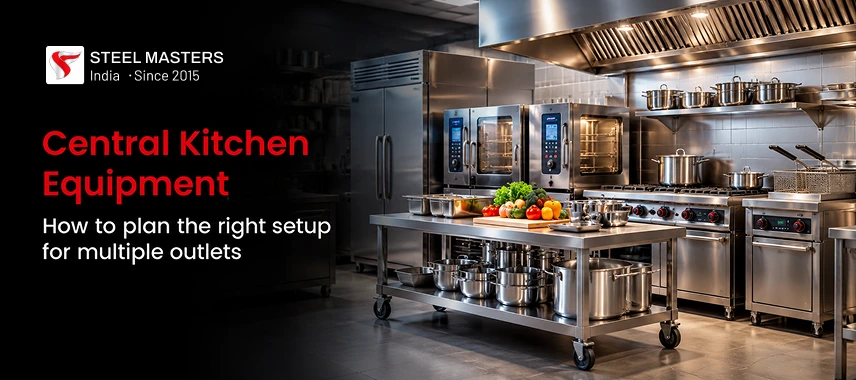
When a food business operates several restaurants or food outlets, preparing each item separately can lead to inconsistencies in taste, portion size, preparation time, and stock use. Central Kitchen Equipment helps businesses create a dedicated production area where food can be prepared in larger batches and sent to different locations. The right setup depends on the menu, daily production volume, kitchen size, storage needs, staff movement, food safety practices, and delivery schedule. Careful planning at the outset can also prevent unnecessary equipment purchases and space problems later.
Understanding Central Kitchen Equipment Requirements
A central kitchen differs from a small restaurant kitchen because it produces for several locations. Rather than preparing a limited number of meals for customers at one site, the facility may produce sauces, gravies, chopped vegetables, dough, cooked rice, desserts, marinades, packaged meals, and other items for multiple outlets.
Before buying equipment, the business should prepare a detailed production list. This list should specify what will be prepared in the central facility, how much will be produced each day, how long each preparation takes, and how the finished products will be stored.
For example, a restaurant group with ten outlets may produce large quantities of curry base, pizza dough, burger sauces, chopped vegetables, and desserts at one location. Each outlet can then complete the final preparation according to its menu.
The production plan should also account for busy days, seasonal demand, special events, and future outlet additions. This information gives the kitchen planner a clearer basis for selecting equipment and arranging work areas.
Central Kitchen Equipment for Food Preparation
Food preparation usually takes place before cooking begins. The preparation section may require vegetable cutters, slicers, peelers, food processors, mixers, dough preparation machines, meat grinders, and work tables.
The right machine depends on the ingredients and the quantity handled each day. A bakery may require heavy-duty mixers and dough equipment, while a restaurant group producing Indian food may require vegetable preparation machines and large-capacity mixers.
Work tables should provide enough space for weighing, cutting, sorting, and transferring ingredients. Separate preparation zones can be planned for vegetables, meat, bakery products, and ready-to-eat ingredients according to the kitchen's food safety procedures.
Central Kitchen Equipment for Large-Scale Cooking
The cooking section is the main production area in many central kitchens. Depending on the menu, it may include ranges, burners, tilting kettles, steamers, fryers, ovens, grills, rice cookers, and large cooking vessels.
Commercial cooking equipment should be selected based on batch size rather than simply choosing the largest available machine. A kettle that is too large for the normal production level may waste space and energy, while a small cooker may require several batches to fulfil the same order.
The menu should guide the selection process. A facility producing sauces and gravies in large quantities may benefit from large kettles. A bakery production unit may need deck ovens, planetary mixers, dough machines, and proofing equipment. A facility producing fried foods may require several fryers with suitable extraction systems.
Commercial Kitchen Equipment and Kitchen Zoning
The layout directly affects how people and ingredients move through the facility. A basic central kitchen flow can follow this sequence:
Receiving → Inspection → Storage → Preparation → Cooking → Cooling → Packing → Finished Storage → Dispatch
This arrangement gives each activity a clear location. Raw materials arrive at the receiving section, move into dry or temperature-controlled storage, and then proceed to the preparation area.
Cooked food should follow a separate path from incoming raw ingredients wherever practical. This helps reduce unnecessary contact between raw and prepared food.
The same principle applies to equipment placement. Preparation equipment should remain close to preparation tables, cooking equipment should be grouped by menu, and packing stations should be positioned near finished-food areas.
Choosing Stainless Steel Kitchen Equipment
A central kitchen needs work surfaces and equipment that can withstand frequent use and regular cleaning. Stainless steel kitchen equipment is commonly used in commercial food facilities because stainless steel surfaces are suitable for many food preparation applications and can be cleaned regularly.
Work tables, sinks, storage racks, shelves, cabinets, trolleys, counters, and selected cooking machines can be made from stainless steel.
The thickness and construction of the material should be matched to the equipment's purpose. Heavy-use preparation tables and storage racks may require stronger construction than equipment used for lighter tasks.
The design should also avoid difficult-to-clean gaps where food particles or moisture may collect. Rounded edges, accessible surfaces, suitable drainage, and proper installation can make routine cleaning easier.
Restaurant Kitchen Equipment for Multiple Outlets
When several restaurants receive products from one facility, the production team needs clear systems for portioning and packing. Restaurant kitchen equipment at the central facility should support the type of food being produced and the expected daily workload.
Weighing scales help maintain consistent quantities during batch preparation. Food processors and cutters help with repetitive preparation tasks. Large cooking vessels handle bulk production, while cooling and storage systems hold finished batches before dispatch.
Packaging equipment also needs attention. Depending on the products, the facility may require sealing machines, labelling systems, food containers, trays, insulated boxes, and storage crates.
Hotel Kitchen Equipment for Central Production
Hotels often handle large meal volumes, banquets, room service, restaurants, breakfast operations, and events. Kitchen equipment in a central production facility may therefore need to support several food categories simultaneously.
Large ovens, cooking kettles, refrigeration units, preparation tables, mixers, food processors, storage racks, and dishwashing systems can form part of such a facility.
The menu should remain the primary reference point. A hotel that produces bakery products in large quantities will have different equipment requirements from a hotel focused mainly on bulk Indian meals, banquet food, or ready-to-serve dishes.
Production schedules are also important. Breakfast preparation may need to be completed early, while banquet items may follow a different timetable. The kitchen should provide separate work areas so several production tasks can proceed without creating congestion.
Refrigeration and Storage Planning
Cold storage is one of the most important areas in a central production facility. Raw vegetables, dairy products, meat, prepared sauces, cooked food, desserts, and other temperature-sensitive items may require controlled storage.
The kitchen may need walk-in refrigerators, freezers, reach-in units, blast chillers, or refrigerated preparation counters.
Storage capacity should be calculated from actual stock levels. Businesses should consider how much food is received, how much is prepared each day, and how long finished products remain at the facility before dispatch.
Ventilation, Drainage, and Utility Planning
Large-scale cooking creates heat, steam, smoke, and cooking fumes. The kitchen therefore needs a properly planned exhaust and ventilation system.
Cooking equipment should be positioned according to the ventilation design. Fryers, grills, ranges, ovens, and other heat-producing machines may require suitable extraction arrangements.
Drainage is another major consideration. Floors should be designed for regular washing, with suitable slopes and drainage points. Water supply should be sufficient for food preparation, cleaning, dishwashing, and handwashing stations.
Working With a Commercial Kitchen Equipment Supplier
Selecting a suitable commercial kitchen equipment supplier involves more than comparing machine prices. Businesses should review equipment specifications, capacity, material quality, installation requirements, service arrangements, spare-part availability, and warranty terms.
The supplier should receive complete information about the menu, production volume, kitchen dimensions, available utilities, storage requirements, and the expected working schedule.
A detailed equipment schedule can then be prepared. It may include the machine name, dimensions, power requirements, capacity, quantity, location, and installation requirements.
This information can make the purchasing process easier and help the business compare equipment options against actual requirements.
Cleaning, Maintenance, and Staff Safety
Every machine in a central kitchen needs a cleaning and maintenance routine. Staff should know how each machine is operated, cleaned, stored, and checked before use.
Equipment should have sufficient clearance around it for cleaning and inspection. Moving parts should be handled according to the manufacturer's instructions.
Planning the Dispatch Section
The final stage of central production is dispatch. Prepared food needs to be sorted, packed, labelled, stored, and sent to the correct outlet.
The dispatch area should have enough space for finished products and delivery containers. Orders can be arranged by outlet, route, meal period, or product category.
Labels may include the product name, quantity, production date, storage information, and destination as required by the business.
A clear dispatch checklist can help staff confirm that every outlet has received the required products before the vehicle leaves the facility.
Managing the Budget
A central kitchen can involve considerable spending on cooking machines, refrigeration, preparation equipment, storage, ventilation, plumbing, electrical work, flooring, drainage, and installation.
The business should therefore divide the budget into equipment and infrastructure costs.
Machines should be selected according to production needs. Buying equipment with capacity far beyond normal requirements may take up useful space and increase operating costs. At the same time, equipment with insufficient capacity can create production delays.
It is also useful to reserve part of the budget for installation, staff training, maintenance, replacement parts, and future additions.
Final words
A well-planned central facility can help a growing food business prepare products for several outlets from a single production location. The process starts with the menu and daily production figures, then moves to equipment selection, storage planning, kitchen zoning, ventilation, food safety, packing, and dispatch.
Central kitchen equipment should be selected based on actual production requirements rather than a generic equipment list. Cooking machines, preparation tools, refrigeration units, storage systems, work tables, packing stations, and utility systems must work together within the available space.
With clear planning and suitable equipment, businesses can create a central production facility that supports multiple outlets while maintaining consistent preparation methods, controlled stock handling, and organised daily kitchen operations.
Table of Contents
- Understanding Central Kitchen Equipment Requirements
- Central Kitchen Equipment for Food Preparation
- Central Kitchen Equipment for Large-Scale Cooking
- Commercial Kitchen Equipment and Kitchen Zoning
- Choosing Stainless Steel Kitchen Equipment
- Restaurant Kitchen Equipment for Multiple Outlets
- Hotel Kitchen Equipment for Central Production
- Refrigeration and Storage Planning
- Ventilation, Drainage, and Utility Planning
- Working With a Commercial Kitchen Equipment Supplier
- Cleaning, Maintenance, and Staff Safety
- Planning the Dispatch Section
- Managing the Budget
- Final words